 Monster Sawmills
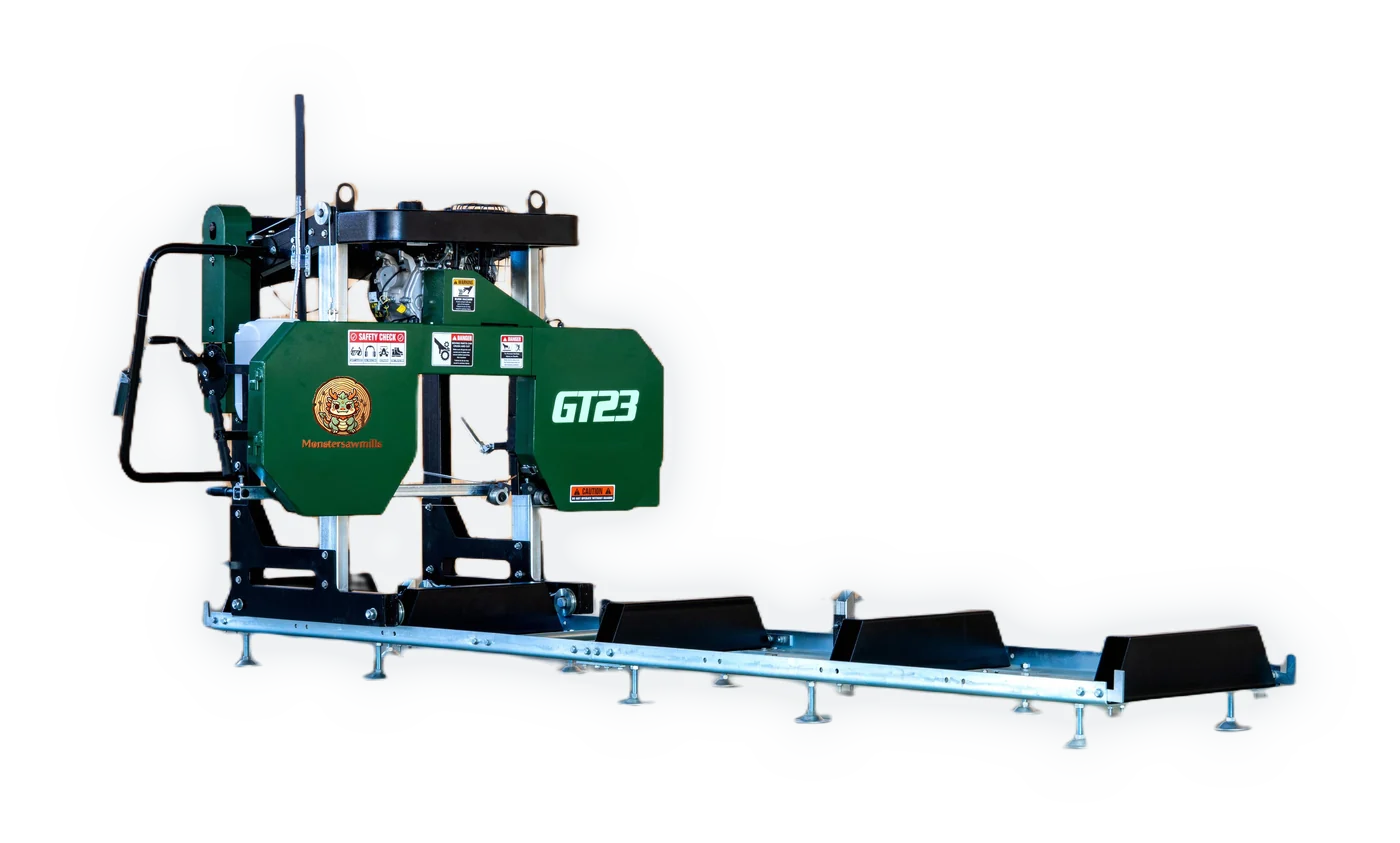
All-rounder series
GT23
Home workshops and smallholdings
- 540 mm23 in
- 500 mm20 in
- 10 hp7.5 kW
Combination planer series
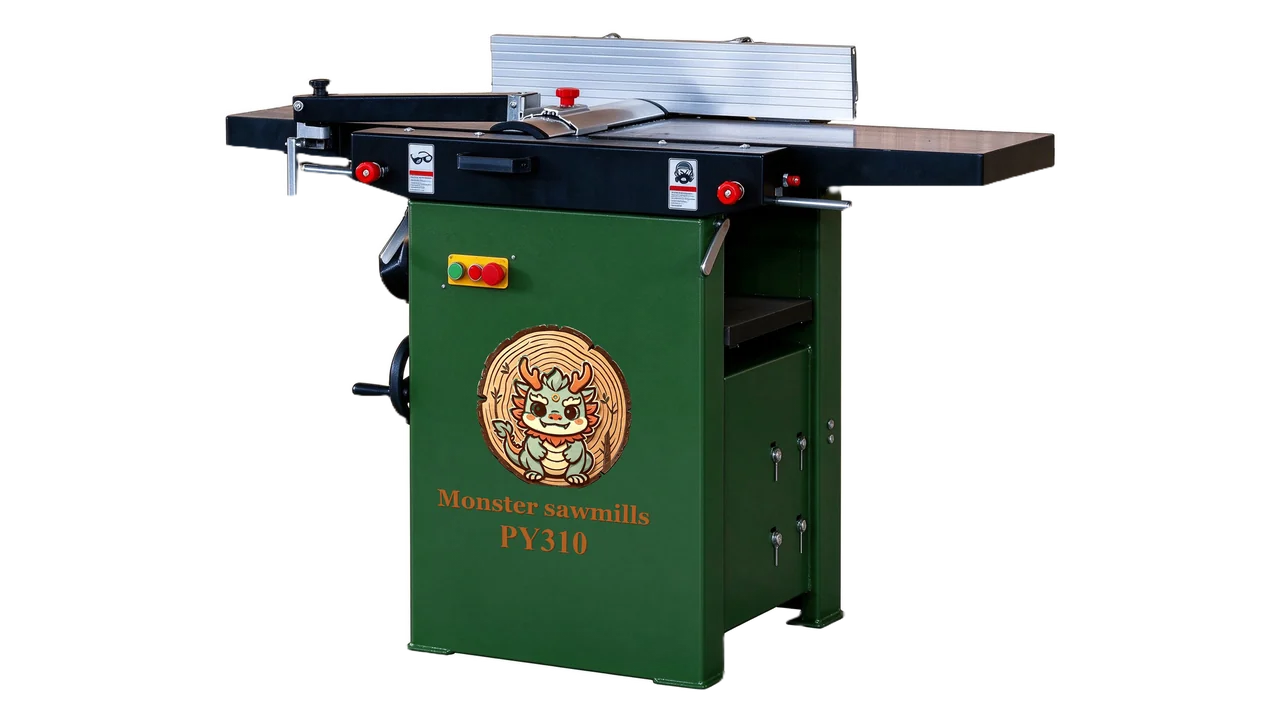
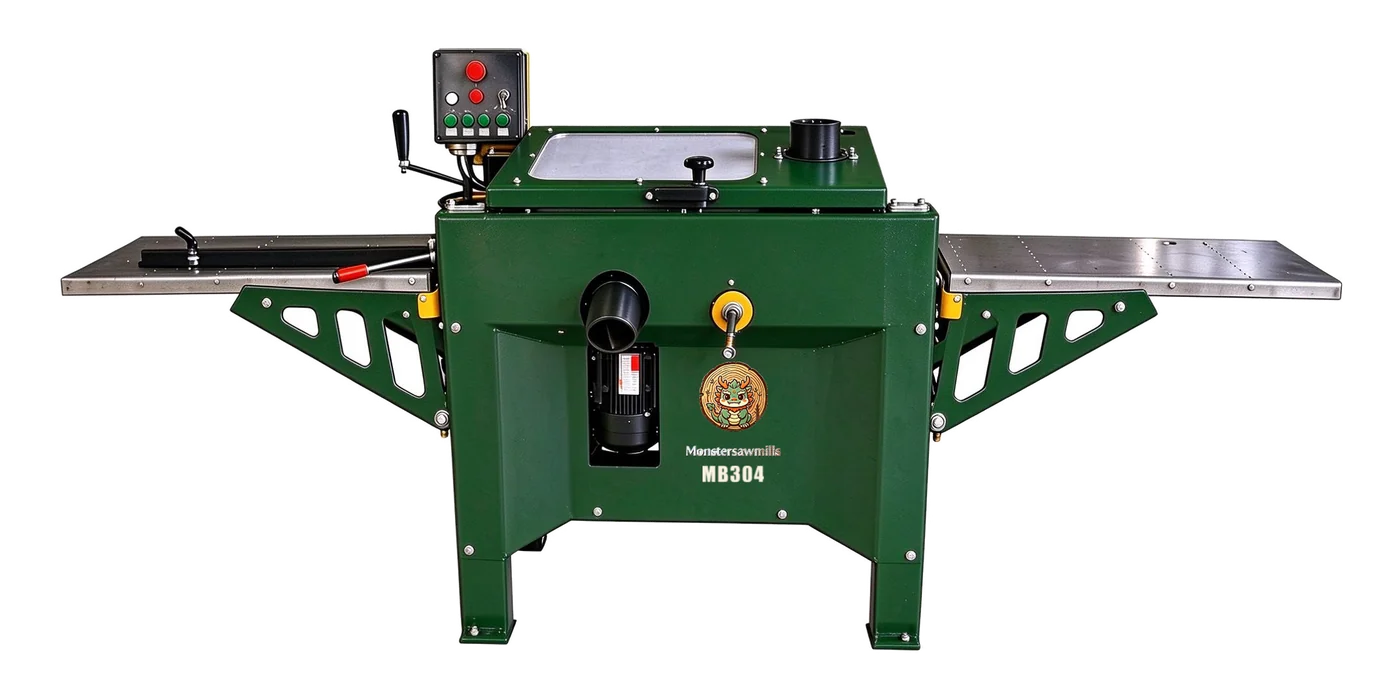
A combination surface planer and thicknesser: one machine that flattens a board and then brings it to thickness. The two planing tables fold up out of the way and the thicknessing table takes over, so a workshop gets both jobs without giving up floor space to two machines. The cutter head is the spiral type with replaceable indexable inserts, and the thicknessing height is set on a handwheel with a digital readout, so a size can be repeated days later. The fence tilts from 90 to 45 degrees for squaring an edge.
Figures are for the standard machine with the spiral cutter head. The planing tables fold up for thicknessing, so the machine keeps the same footprint in both modes.
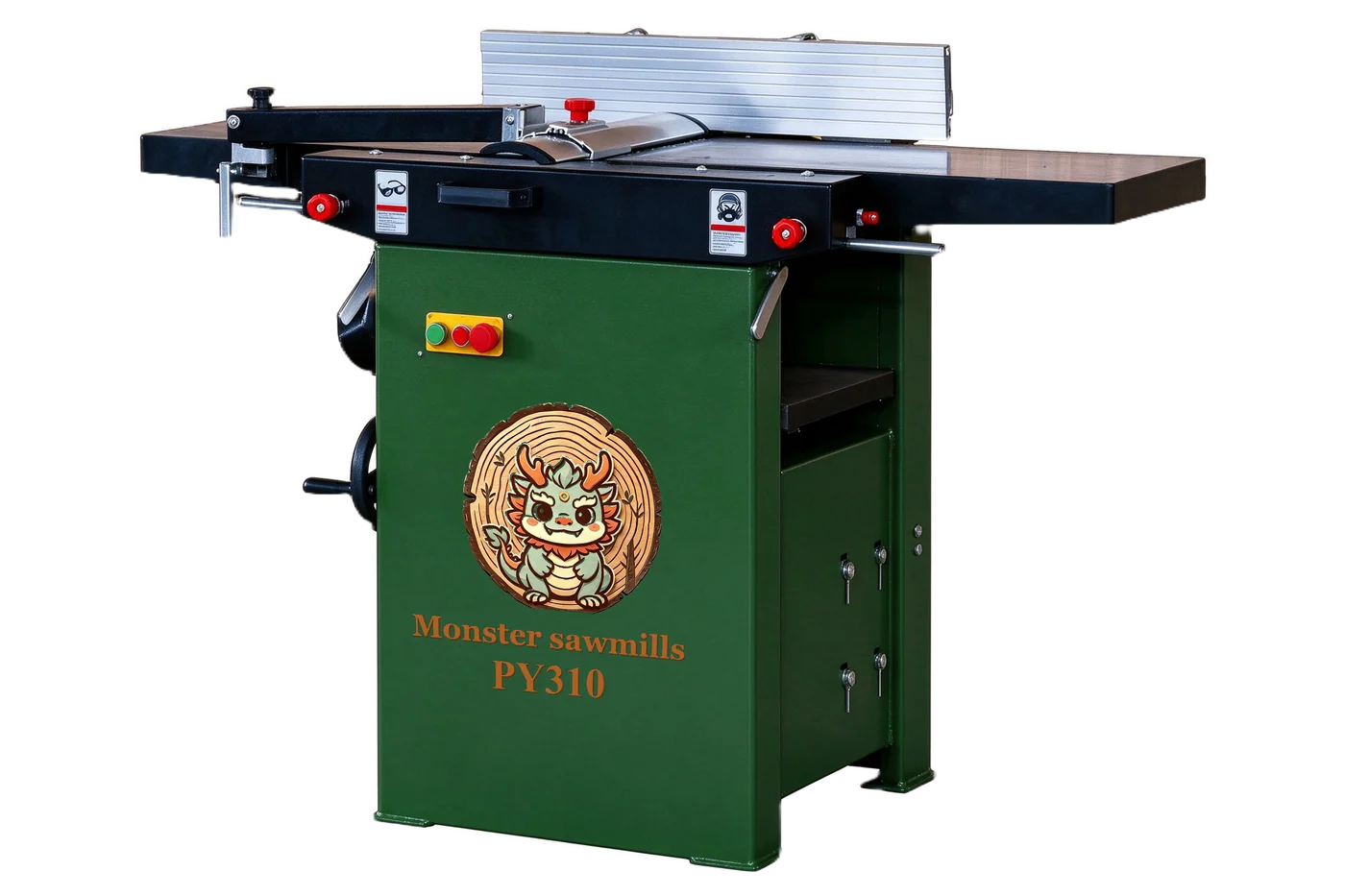
The assemblies that decide how the cut comes out.
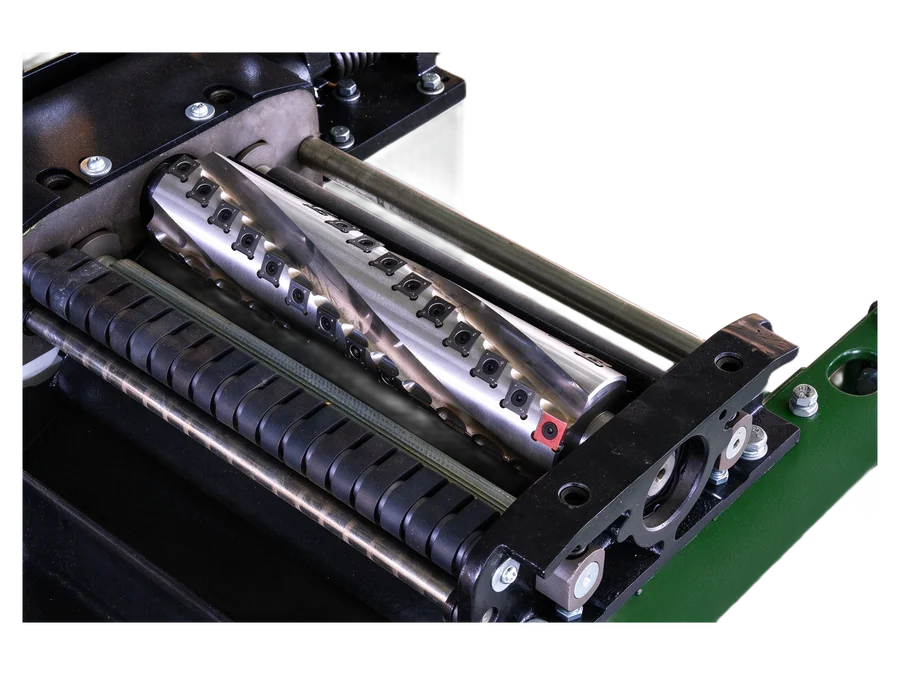
The cutter head carries rows of small indexable inserts set on a helix, and a sectional in-feed roller holds the board down as it passes. When an edge dulls you turn the insert to a fresh corner instead of sending a knife away for grinding, and the shearing angle takes a lighter, quieter bite than a straight knife block.
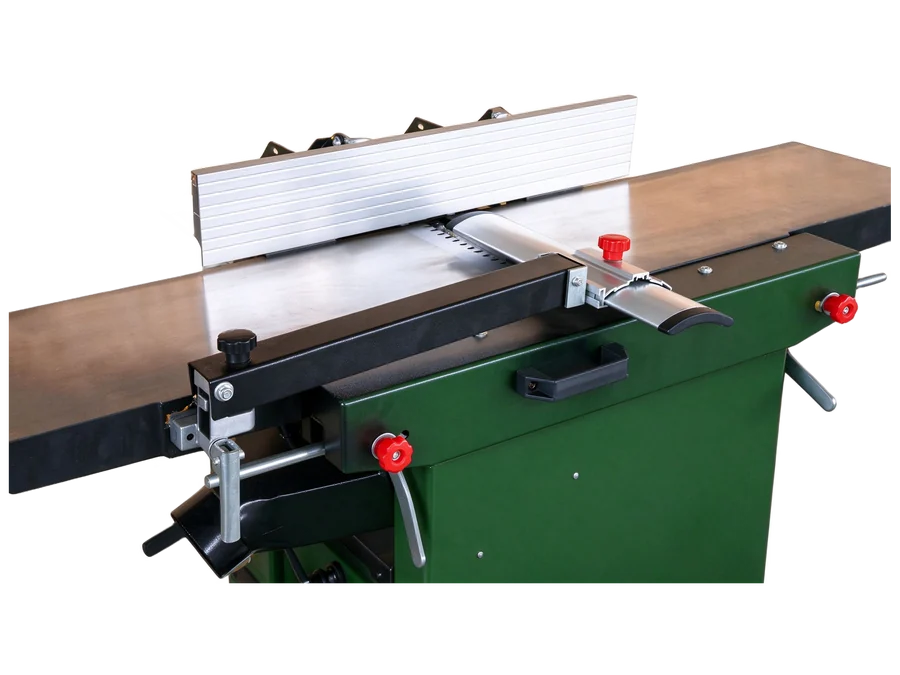
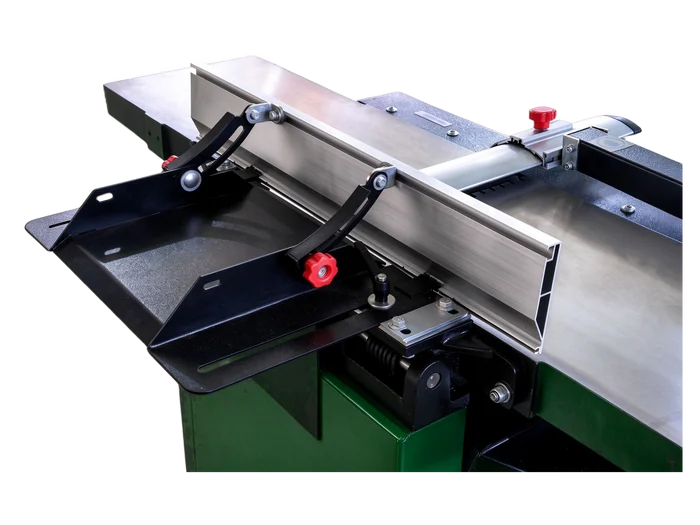
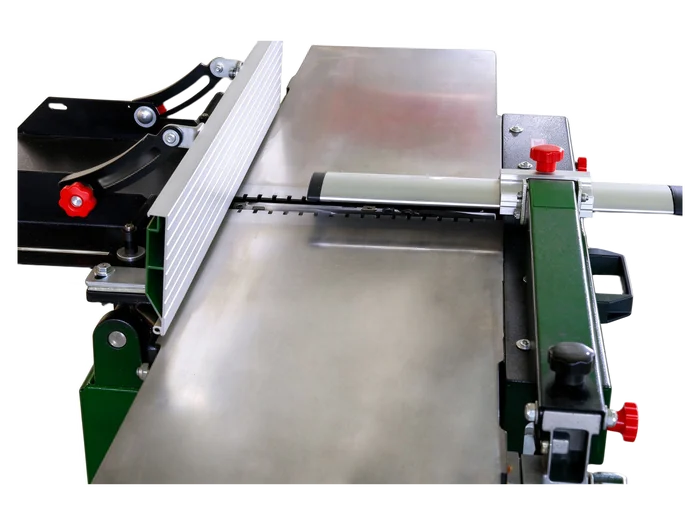
Both planing tables are precision-ground cast iron, so a board has a flat reference to slide on and stays flat across its width. The aluminium fence tilts from 90 to 45 degrees and locks with the red handles, which is what squares an edge or puts a chamfer on it.
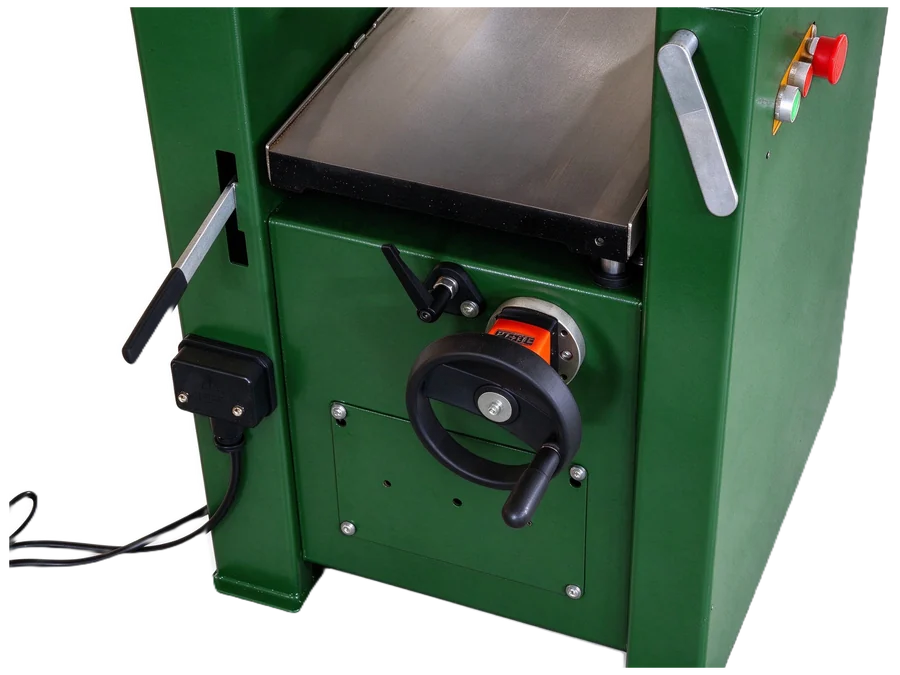
The thicknessing table is raised and lowered on a handwheel, and the height is read off a graduated dial next to it. That is what makes a size repeatable: set it once, note the reading, and the next batch comes out at the same thickness without measuring every board.
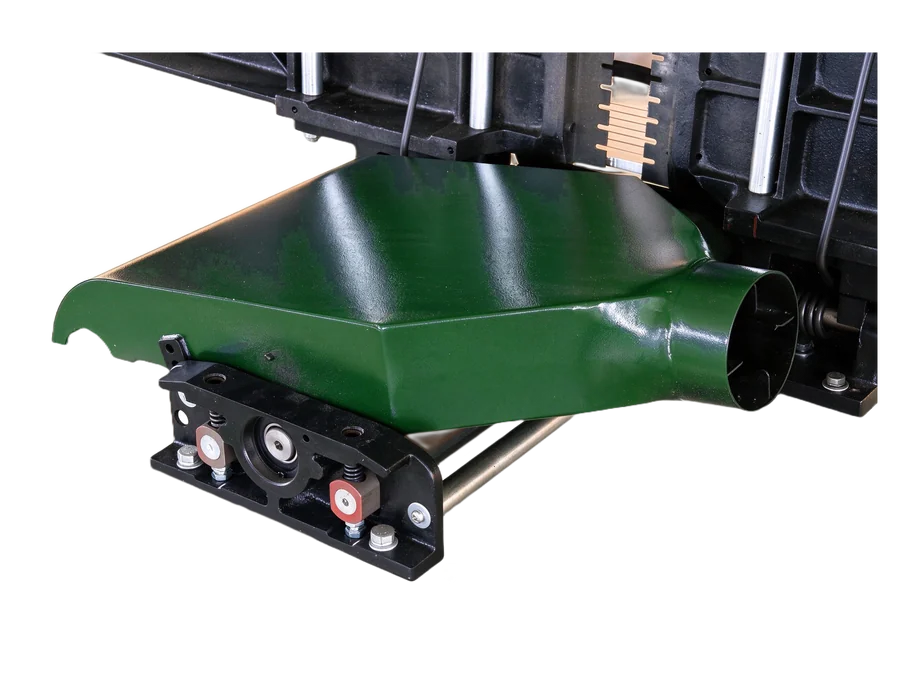
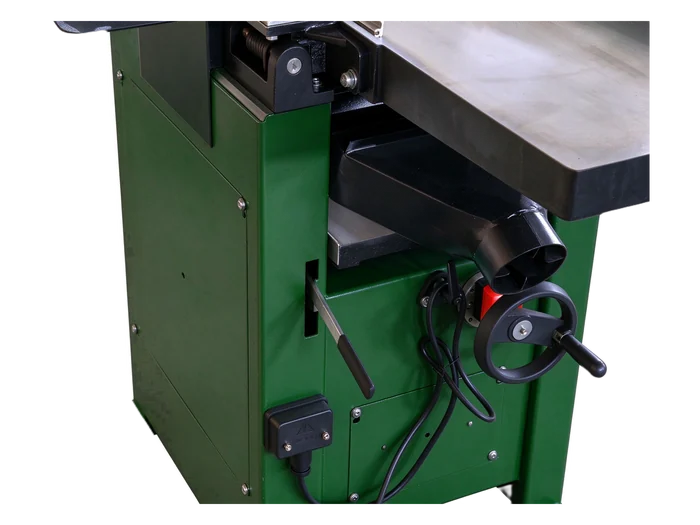
Chips leave through a hood that covers the cutter head, with the outlet on the side of the machine for a standard extractor hose. The hood lifts clear for changing inserts, so the job does not turn into a disassembly.
Close-ups of the parts you will adjust.
See it cutting
 Video coming soon
Filming is under way — ask us and we will send the cutting clip.
Specifications are quoted from the manufacturer's current sheet for this machine. Confirm them against the machine before ordering.
No. The machine does both jobs: the planing tables are deployed for surface planing, and fold up out of the way when you switch to thicknessing. What you give up against two dedicated machines is changeover time - you set the machine up for one job or the other rather than having both ready at once. What you gain is the floor space and the cost of the second machine.
The machine itself is 1,400 mm long, 770 mm wide and 1,000 mm high, and it needs that footprint whether it is planing or thicknessing, because the tables fold rather than slide away. Add room at both ends for the boards you handle - a 2 m board needs 2 m clear at each end of the planing tables.
Two things. The first is maintenance: the cutting edge is a small indexable insert, and when it dulls you turn it to a fresh corner rather than sending the knife out to be ground. The second is the cut itself - the inserts are set on a helix, so they shear the timber instead of hitting it square, which leaves less torn grain on figured stock and takes less power per pass.
All-rounder series
Home workshops and smallholdings
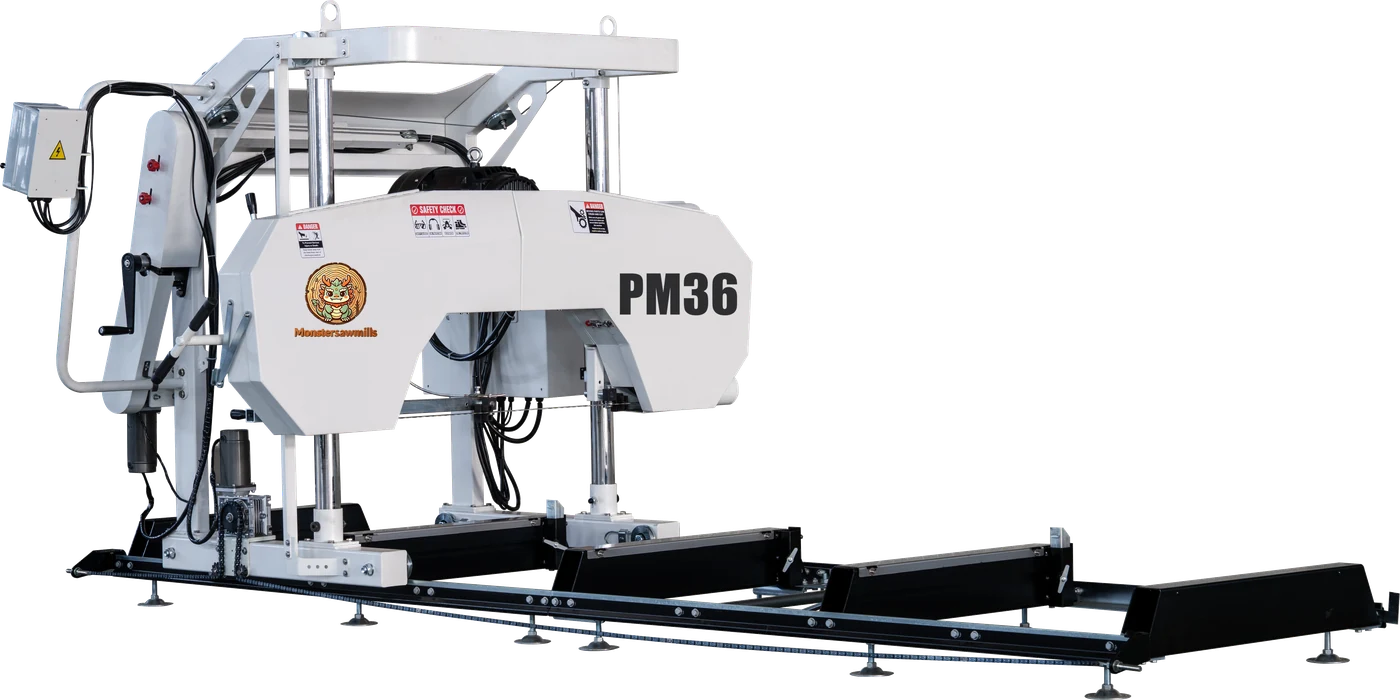
Contract sawyer series
Contract sawyers and small timber yards
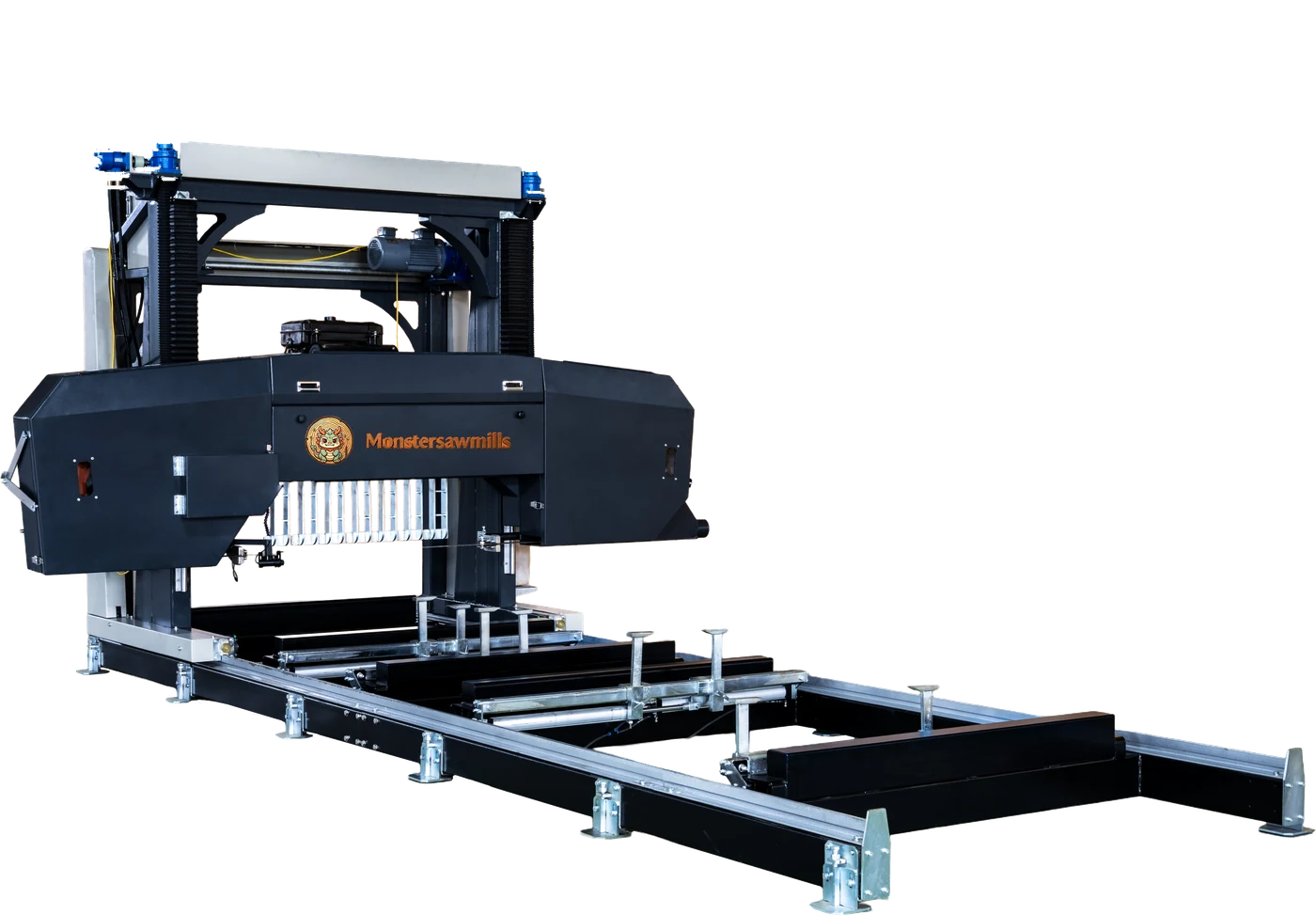
Heavy-duty industrial series
Production mills and timber yards
Three-side planer series
Joinery shops and timber yards
Board edger series
Sawmills and timber yards
Farm series
Farm and homestead duty
Professional series
Contract sawyers and workshops
Industrial series
Industrial production